Containment force
Containment force is the total squeeze that all the layers of film put on a load. It is wrap force, how tight each layer goes on, multiplied by the number of layers, and it is what actually keeps a load on its pallet. Measure it at the top, middle and bottom of the load, at least once a shift.1
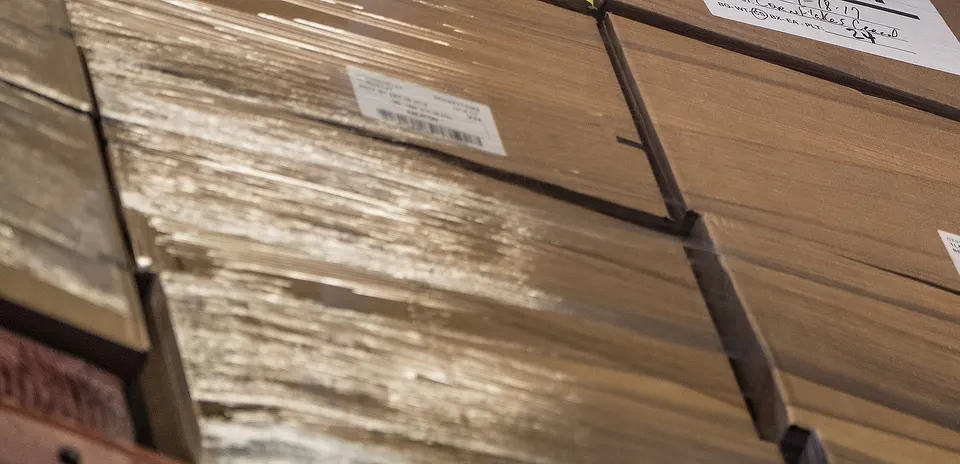
Wrap force and layers
Each layer of film goes on under some tension: that is its wrap force. A load wrapped with five layers in a zone feels roughly five layers' worth of squeeze there. So the same containment force can come from fewer layers of tight film or more layers of looser film, and from heavy film or light. That is why it is the number to manage, not the gauge or the turn count on their own.
How it is measured
The trade measures it with a containment force tool: a plate or probe pulled out from the face of the load under the film, reading the force needed to pull the film a set distance away. Lantech, a wrapper maker, recommends measuring at the top, middle and bottom of the load, because a wrap can be tight in the middle and slack at the base, and checking at least one load per shift.1
What changes it
- Pre-stretch. More stretch means thinner film on the load. One wrapper maker says 65 gauge film stretched 250 percent is about 26 gauge once applied.2 Thinner film per layer means less force per layer unless the wrap force rises.
- Wrap force setting. The tension between the carriage and the load. Too low and the film lies slack; too high and it tears or crushes light cartons.
- Layers. Set by turns and overlap. Adding base and top turns raises force where loads usually fail.
- Hand or machine. By hand the stretch is 25 to 100 percent; on a powered carriage, 150 to 350.3 Hand-wrapped force varies with the person wrapping.
Why it is worth checking
Lantech states that about half of in-transit product damage has ineffective stretch wrapping as its root cause.4 That is a machine maker's figure, so read it as a claim and not a census; but it is the reason the trade measures force rather than trusting the gauge. When you change film, gauge or wrapper setting, measure a few loads at all three heights before and after. If the force holds, the change worked.
Setting a target
There is no universal figure for how much containment a pallet needs. A light load of cereal boxes needs far less squeeze than a pallet of canned drinks, and squeezing a light load too hard crushes the corners of its cartons. Wrapper makers and testing labs publish rule-of-thumb ranges by load weight; use those as a starting point, then settle your own target from loads that arrived well. Write it down beside the wrapper, with the film and settings that reach it.
Without a tool
If you don't have a gauge yet, a rough check is better than none. Press the film flat against a carton face at each height: on a good wrap it barely gives, and it gives about the same at the top as at the base. A wrap you can lift away from the load with a finger, especially at the top tier, has too little containment there. This is a first look, not a measurement; it is how you decide which loads to test properly.
When the readings disagree
Low at the bottom usually means too few base turns or film not carried down onto the pallet deck. Low at the top points at top turns, or the carriage reversing before it reaches the last tier. Low everywhere means the film is going on slack: check the pre-stretch rollers, the wrap force setting and the film itself. High everywhere, with crushed corners, means too much tension for the load.
See machine film for the rolls and how to wrap a pallet for the pattern.
Recording the results
Keep a simple log beside the wrapper: date, shift, load type, film, settings and the three readings. Over a few weeks it shows which loads run close to the limit and whether a change helped. It also gives you evidence when a customer reports damage, showing the load left with a tested wrap.
Containment and the receiving dock
A pallet that arrives with its corners crushed and the film tight was wrapped too hard; one that arrives with the top tier shifted and the film loose was wrapped too soft. Ask receivers for photos of problem loads, and match them against your log.
Automatic testing
Some modern wrappers measure and adjust force themselves, using sensors on the carriage. They still drift with worn rollers or changed film, so a manual spot check each week keeps them honest. Test labs also run full transit simulations, shaking and tilting wrapped pallets, for shippers who need certainty before a big change.
Questions readers ask
- What does a containment force tool cost?
- Simple hand tools are inexpensive compared with a month of film on a busy dock. Wrapper makers and packaging suppliers sell them; some lend them for trials.
- Do we need to test hand-wrapped pallets?
- Yes. Hand wraps vary far more than machine wraps from person to person, so a few measurements per shift show who needs a refresher on tension and turns.
- Does containment drop over time?
- Film relaxes slowly after wrapping, and loads settle in transit. That is why it is worth testing some loads at the receiving end as well as at the wrapper.
- Is more containment always better?
- No. Past what the load needs, extra force crushes light cartons and wastes film.
- Who should do the testing?
- Whoever runs the wrapper, trained once.
Sources
- Lantech, "Use the force: containment force is the key to safe pallet loads" (reviewed 2026-11-13)
- Lantech, "Blown vs. cast: how is stretch film made?" (reviewed 2026-11-13)
- Colony Packaging, "4 differences between stretch film and shrink film" (reviewed 2026-11-13)
- Lantech (a stretch wrapper maker), lantech.com (reviewed 2026-11-13)
Facts on this page last reviewed 2026-11-13.