Stretch film by type and gauge
Every roll we supply is described by two things before its size: how the film was made, cast or blown, and how thick it is, in gauge. Cast is the larger share of what is made, about 70 to 80 percent by one wrapper maker's estimate.1 Gauge runs from the light films used on powered carriages to heavy film for loads of 3,000 pounds and more.2
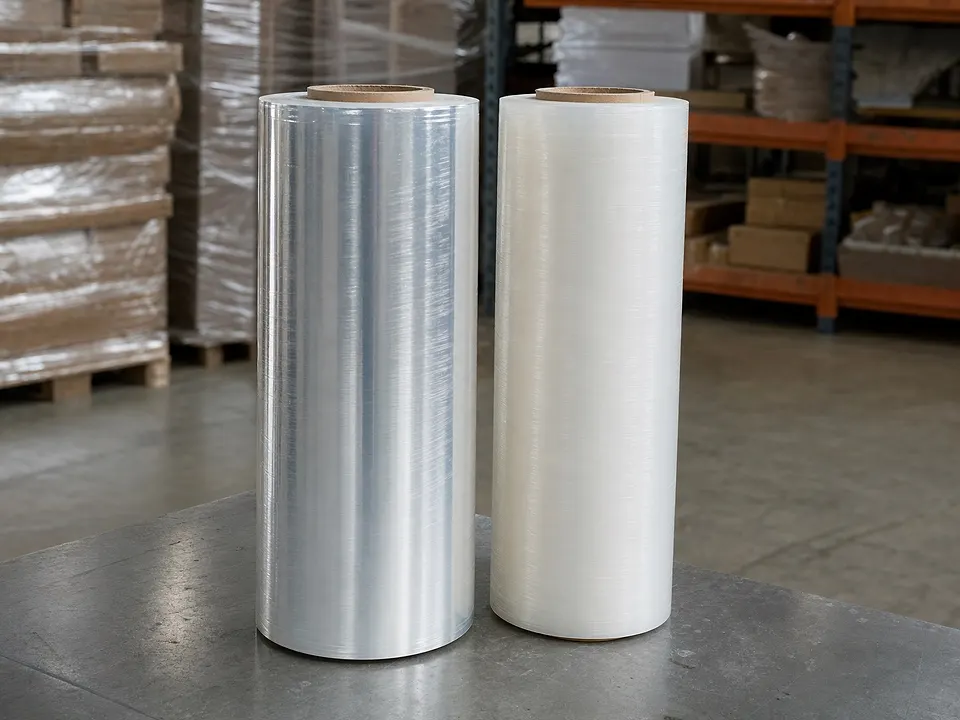
Cast or blown
How the film is made decides how it behaves.
Cast stretch film
Clear · quiet · even gaugeCooled on chilled rollers. A buying guide recommends it for uniform loads.
Blown stretch film
Tough · clingy · louderCooled as a tall bubble of air. Better on irregular loads and sharp corners.
By gauge
Thickness, matched to the weight on the pallet.
- 60 gauge0.6 mil
- 63 gauge0.63 mil
- 70 gauge0.7 mil
- 80 gauge0.8 mil
- 90 gauge0.9 mil
- 100 gauge1 mil
- 120 gauge1.2 mil
The scale above is from a published buying guide.2 It is a starting point: pre-stretch, the wrap pattern and the shape of the load all move the answer. The gauge chart explains how.
Tinted, opaque and the rest
When clear film isn't enough.
Tinted film codes loads by colour; opaque film hides what is on the pallet.3 Vented film lets cold loads breathe. All of them are in specialty film.
Reading a spec line
Type and gauge come first.
A full description reads like this: blown, 80 gauge, 18 inches by 1,500 feet, 3 inch core, four rolls a case. Type and gauge say how the film will behave on the load; width, length and core say whether it fits the dispenser or carriage and how often someone changes the roll. Get the first two right for the pallet, and the rest follows from how you wrap.
Sources
- Lantech, "Blown vs. cast: how is stretch film made?" (reviewed 2026-11-13)
- AAA Polymer, "A guide to buying stretch wrap film" (reviewed 2026-11-13)
- Uline, stretch wrap guides (reviewed 2026-11-13)
Facts on this page last reviewed 2026-11-13.
Ask for a stretch film quote
If you don't know the type or gauge, describe the load: weight, height, square or sharp. We will suggest the film.
- Step 1 asks what you need, how much a month, the delivery ZIP and how to reach you
- Step 2 asks the film, the width and the gauge; skip what you don't know