Stretch wrap for dairy
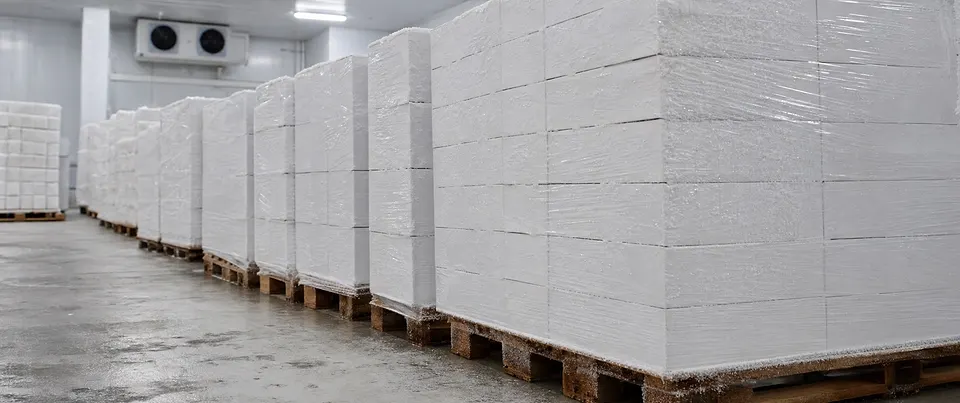
The loads, and the film for each
Start from what is on the pallet.
Cases of fluid milk and cultured products
Machine film, 80 gaHeavy liquid loads in cases; firm base and top wraps.
Where the industry is
States with the most jobs in it, BLS QCEW 2025.
Labels and lots
Why clear film suits dairy.
Dairy runs on dates. Clear cast film lets a receiving dock read lot and date labels without cutting the wrap, and tinted film can code a pallet by day if your plant does that. Many dairy foods are covered by FDA's Food Traceability Rule, which FDA says it won't enforce before July 20, 2028;3 readable labels through the film make the records easier to keep. For the Columbus area, where dairy is 2.7 times its national share, see Columbus.
Cheese, butter and cultured products
Dense and refrigerated.
Blocks of cheese in cartons are among the densest loads a food plant ships; they need firm base turns more than a heavy gauge. Butter and yogurt travel chilled, and their cartons are often printed and need to arrive looking clean for retail, so clear cast film that doesn't scuff the print is a common choice. Milk in returnable cases goes out on daily routes, often wrapped by hand at the plant's loading bay, which favours a blown hand roll with good cling that operators can work quickly in the cold.
Route trucks and daily loads
Short trips, many stops.
Dairy distribution is often daily delivery to stores and institutions, with several stops per truck. Pallets are partly unloaded at each stop, so the film is cut and the rest of the load must stay stable. Wrapping each stop's cases as a separate block, or using netting on returnable crates, keeps the remaining stack together after the first drop.
Ice cream ships deep-frozen; use film rated for freezer temperatures.
Questions from these docks
- Can tinted film code dairy by day?
- Yes. A colour a day, posted at the wrapper, lets a receiving dock see the date without reading labels.
- What about pallets of liquid in returnable crates?
- Crates stack square but the liquid surges; firm base and top wraps matter more than gauge.
- How should bagged milk powder be wrapped?
- Like other sacked loads: firm base turns, film carried onto the pallet, and blown film to cling to the uneven face.
Sources
- BLS QCEW 2025, dairy product manufacturing (NAICS 3115) (reviewed 2026-11-12)
- BLS QCEW 2025, all private industries (reviewed 2026-11-12)
- FDA, FSMA Food Traceability Rule (reviewed 2026-11-12)
Facts on this page last reviewed 2026-11-13.
Ask for a stretch film quote
Say what the cases hold and how cold, and whether you wrap by machine or by hand.
- Step 1 asks what you need, how much a month, the delivery ZIP and how to reach you
- Step 2 asks the film, the width and the gauge; skip what you don't know