Stretch wrap for produce packers
Fresh produce keeps breathing after it is packed, and a pallet wrapped in solid film traps that heat and moisture. Fruit and vegetable preserving, one of the industries that ships it, employed 173,844 people in 2025 across 2,936 US establishments.1
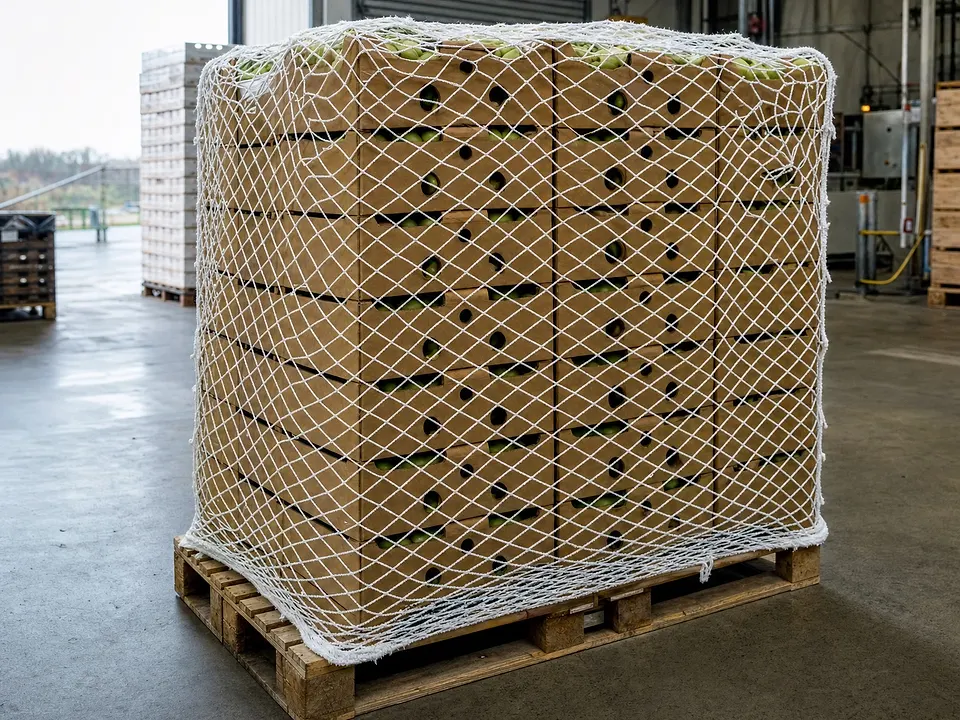
The loads, and the film for each
Start from what is on the pallet.
Field-packed cartons still cooling
Vented filmHolds the stack while air keeps moving through the load.
Bins and loads needing open airflow
Stretch nettingFar more open than vented film, for produce that must keep breathing hard.
Canned and frozen vegetables
Machine film, 80 to 90 gaHeavy cases of cans, or frozen cartons: solid film, cold-rated where needed.
Where the industry is
States with the most jobs in it, BLS QCEW 2025.
- California27,518 jobs
- Wisconsin11,014 jobs
- Washington10,988 jobs
- Ohio10,327 jobs
- Texas9,194 jobs
US total in fruit and vegetable preserving: 173,844 private jobs across 2,936 establishments, 2025 annual average.1
Vented film, done right
Three rules from a cold-chain guide.
Vented film suits produce, flowers, frozen and damp goods. Never wrap solid film over it. It adds little rigidity, so tall loads may need corner boards. And too much tension pulls the vents shut.2 On a turntable, that means a lower pre-stretch than you would run on solid film, and a look at the vents on the finished pallet. In Washington, where fruit and vegetable preserving is 2.8 times its national share, a lot of film goes on loads like these.
Harvest season
Volume all at once.
Packers often wrap more pallets in a few weeks of harvest than in the rest of the year together, and many use seasonal crews who are new to the wrapper. Keep the film simple: one vented roll for fresh product, one solid roll for anything packed and shelf-stable, colour-coded cores if your supplier offers them. Order ahead of the season, because running out of the right film in the middle of a harvest means wrapping fresh product in whatever is left, which is how loads get spoiled. Store rolls out of the sun in the packing shed.
Cooling after wrapping
Forced-air and hydro-cooling.
Many packers pre-cool pallets with forced air drawn through the cartons or with cold water. Film placed before cooling has to let that air or water through, or the pallet stays warm in the middle. Vented film or netting suits forced-air tunnels; solid film should wait until after cooling, if it is used at all, and corner boards keep the stack square while it is cooled.
Bins and field crates
Before the packing line.
Field bins of apples, potatoes or onions moving from orchard or field to the packing shed sometimes get a few turns of netting to stop the top layer spilling on rough farm roads. Once packed into cartons, the pallet is wrapped for the trip to the distributor, usually with vented film or netting.
Questions from these docks
- Why not just wrap produce in solid film?
- It traps field heat and moisture, which softens cartons and spoils product. Vented film or netting lets it out.
- Do we need corner boards with vented film?
- On tall loads, often: vented film adds little rigidity.
- How do we wrap heavy bins of melons or squash?
- Firm base wraps carried onto the pallet, a few turns at the top rim, and netting rather than film if the produce is still warm.
Sources
- BLS QCEW 2025, fruit and vegetable preserving (NAICS 3114) (reviewed 2026-11-12)
- Racklify, "How to choose and apply vented stretch film for cold, frozen and damp products" (reviewed 2026-11-13)
Facts on this page last reviewed 2026-11-13.
Ask for a stretch film quote
Say what the produce is and whether it is still cooling when wrapped; then the film and the monthly count.
- Step 1 asks what you need, how much a month, the delivery ZIP and how to reach you
- Step 2 asks the film, the width and the gauge; skip what you don't know