Stretch wrap for grocery distribution
Grocery distribution centres build pallets to order, store by store, from whatever is on the pick list. No two are the same shape. Grocery and related product wholesale employed 829,364 people across 49,933 US establishments in 2025,1 more than any manufacturing industry on this site.
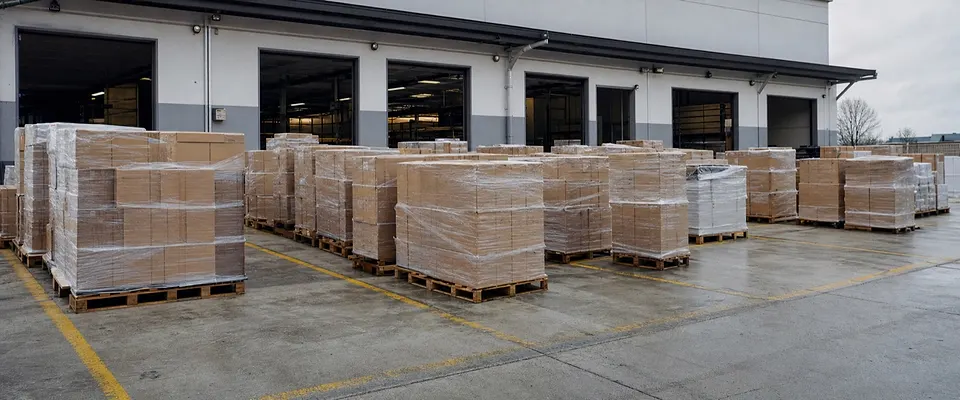
The loads, and the film for each
Start from what is on the pallet.
Mixed dry-grocery store orders
Blown hand film, 80 gaUneven faces; blown film clings and doesn't tear on corners.
Where the industry is
States with the most jobs in it, BLS QCEW 2025.
Mixed pallets
The hardest load to wrap well.
A built-to-order pallet has heavy cases at the bottom if the picker was careful and anywhere if not, overhangs, gaps and a lumpy top. Blown film's cling and tear resistance suit it. Wrap the base onto the pallet, add turns over the weak spots, and roll the film over the top edge. Most of these pallets go out by hand-wrapping or on a semi-automatic turntable, so hand film by the case and machine film both come into it. Warehousing as a whole employed 1,901,976 people in 2025.2
Picking, then wrapping
Pallets built one case at a time.
A store order is picked case by case into a mixed pallet: heavy drinks at the bottom, then canned goods, boxed goods and lighter items on top. The finished pallet is rarely square and often taller than a full manufacturer's pallet. Hand wrapping copes with the uneven shape; turntables need slower carriage speeds and more top turns. Chilled and frozen orders picked in cold rooms need film that clings at low temperature, and stores want the film to come off easily at the back door.
Store receiving
What the store wants.
Store staff want film that cuts away quickly without damaging cases, and a load built so the first aisle's products come off first. Clear film helps them check the order before cutting.
Pallets arriving from suppliers are broken down and rebuilt for stores, so each one is wrapped twice. The second wrap is usually by hand, on a rebuilt pallet that is mixed and uneven, which is where blown hand film earns its keep.
Questions from these docks
- Should store pallets be wrapped by hand or machine?
- Both are common. Machines give a steadier wrap; hand wrapping copes with odd shapes and low volumes.
- How do we stop the top tier falling off?
- Roll the film over the top edge with two or three top turns, and build the heavy cases low.
- How should backhauls be wrapped?
- Empty crates, pallets and recyclables returning from stores need only enough film to stop them falling in the trailer; a few turns of a light hand roll will do.
Sources
- BLS QCEW 2025, grocery and related product wholesale (NAICS 4244) (reviewed 2026-11-12)
- BLS QCEW 2025 annual averages, warehousing and storage (NAICS 493) (reviewed 2026-11-12)
Facts on this page last reviewed 2026-11-13.
Ask for a stretch film quote
Say whether you wrap by hand or machine, dry or cold, and roughly how many pallets a day.
- Step 1 asks what you need, how much a month, the delivery ZIP and how to reach you
- Step 2 asks the film, the width and the gauge; skip what you don't know