Stretch wrap for plastics products
Plastics plants make things that are light, bulky and slippery: bottles, containers, pipe, parts, film itself. Their pallets are tall for their weight and want to lean. Plastics product manufacturing employed 575,006 people across 12,344 US establishments in 2025.1
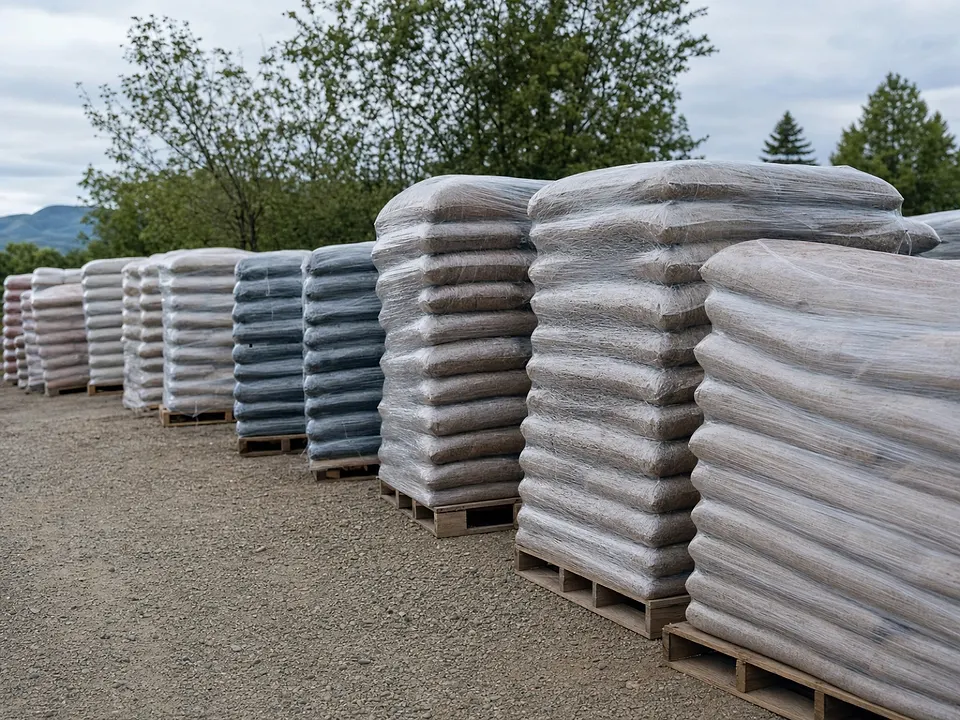
The loads, and the film for each
Start from what is on the pallet.
Where the industry is
States with the most jobs in it, BLS QCEW 2025.
- Ohio42,286 jobs
- Texas40,945 jobs
- California35,933 jobs
- Pennsylvania34,094 jobs
- Indiana33,122 jobs
US total in plastics product manufacturing: 575,006 private jobs across 12,344 establishments, 2025 annual average.1
Light, tall and slippery
Cling matters more than gauge.
On light loads the gauge chart's lightest steps are enough, but smooth plastic surfaces give the film little to grip, and tall stacks act like levers. The fixes are cling, base turns carried down onto the pallet, and enough top turns to tie the top tier in. Wider machine film helps on tall loads; a gentle wrap force keeps thin-walled containers from crushing. Ohio, Texas, California, Pennsylvania and Indiana have the most plastics jobs; all five have ship-to pages here.
Static, dust and outdoor storage
Problems specific to plastics.
Plastic containers and parts build static as they are handled, which attracts dust and can make film cling oddly to the load. Bags of pellets and finished products are sometimes stored outdoors when the warehouse is full, so UV-inhibited film is worth asking for. Plants that make film themselves sometimes wrap their own output with stretch film bought in, because a production line of film is not set up to make a stretch roll. Light, tall loads of empty containers need a careful wrap force: too much and the tops crush, too little and the stack sways.
Bagged resin and pellets
Slumping sacks.
Plants that buy or sell pellets in 50 or 55 pound bags ship pallets that settle and bulge as the contents shift. Wrap firmly at the base, carry the film onto the pallet, and expect to add a turn half-way up to stop the middle tiers bowing outwards. Blown film's cling copes with the uneven face of stacked sacks.
Blown-film and sheet plants ship heavy rolls standing on pallets; stretch film keeps them from rolling. Chock each roll first, then wrap round the group so no single roll can work loose in transit.
Questions from these docks
- Why do our tall pallets of containers lean?
- Light, slick loads give film little grip. Carry the base wraps onto the pallet and add top turns.
- Do plastics plants recycle their film?
- Many can: clean stretch film is LLDPE. Keep it apart from other plastics.
- Why do stacks of nested tubs lean?
- Nested containers grip each other unevenly and spring sideways. Wrap firmly at mid-height and keep stacks under the height the pallet can carry square.
- Do pellet bags need vented film?
- No; pellets don't sweat.
Sources
- BLS QCEW 2025, plastics product manufacturing (NAICS 3261) (reviewed 2026-11-12)
Facts on this page last reviewed 2026-11-13.
Ask for a stretch film quote
Say what the product is, the load height and weight, and the monthly film use.
- Step 1 asks what you need, how much a month, the delivery ZIP and how to reach you
- Step 2 asks the film, the width and the gauge; skip what you don't know