Stretch wrap for meat and poultry
Meat and poultry plants wrap heavy boxes on cold, wet docks, and much of what they ship is frozen. The industry employed 556,647 people across 4,689 US establishments in 2025.1 It is concentrated in a handful of states, Texas, Georgia, North Carolina, Arkansas and Iowa leading.
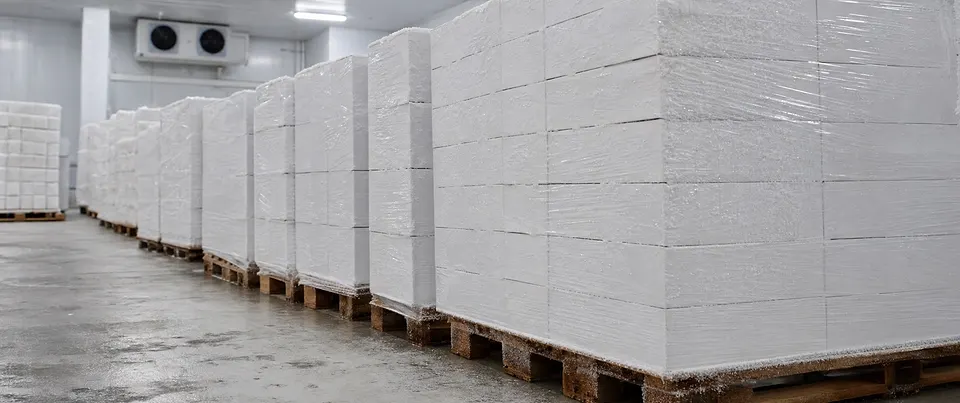
The loads, and the film for each
Start from what is on the pallet.
Boxed fresh meat, chilled
Machine film, 80 to 90 gaHeavy, square boxes; cold-rated film and firm base wraps.
Wet or iced combos and totes
Blown filmCling that holds on damp surfaces, and toughness at the edges.
Where the industry is
States with the most jobs in it, BLS QCEW 2025.
Cold, wet and heavy
Three things film has to cope with.
Cold stiffens film, so check its rating: one common machine roll is rated from 0 to 120 °F.3 Wet cartons need cling that works on a damp face. And frozen product leaving for a warmer dock sweats; vented film lets it, provided nobody wraps solid film over the top and the wrapper doesn't stretch the vents shut.2 In Arkansas, Nebraska and Iowa this industry is many times its national share of jobs, so a lot of the film on those docks is bought for exactly these loads.
Combo bins and boxed product
Two different loads.
Boxed meat leaves in uniform cartons that stack well, so the challenge is mostly weight and cold. Combo bins, the large corrugated or plastic totes used for trimmings and bulk product, are tall and heavy on a small base, and film round them is mostly there to keep the lid and sides in place. Plants also wrap packaging supplies arriving from suppliers, which is ordinary dry freight. Many plants run a wrapper at the end of each line in the cold room and wrap dry goods by hand at receiving.
Sanitation and film
Washdown areas.
Wrapping areas next to production rooms are washed down often. Keep film cases off wet floors, in sealed storage, and replace any roll that gets soaked; wet film loses cling and can carry contamination onto the load.
Frozen exports need extra top turns.
Questions from these docks
- Do wet cartons need special film?
- They need film that clings to a damp surface. Blown film and two-sided cling help; check the tail stays put on your wettest loads.
- Where should frozen pallets get vented film?
- Where they will meet warmer air on the way: an open dock, a long loading time, a warm trailer.
- Are by-products wrapped the same way?
- Rendered products, hides and other by-products often travel in bins, drums or bags, each wrapped as its container needs.
Sources
- BLS QCEW 2025, meat and poultry processing (NAICS 3116) (reviewed 2026-11-12)
- Racklify, "How to choose and apply vented stretch film for cold, frozen and damp products" (reviewed 2026-11-13)
- Uline, machine-length cast stretch film, 80 gauge, 20 in x 5,000 ft (product listing) (reviewed 2026-11-13)
Facts on this page last reviewed 2026-11-13.
Ask for a stretch film quote
Say whether the boxes are chilled or frozen and how they are wrapped; then the film and rolls a month.
- Step 1 asks what you need, how much a month, the delivery ZIP and how to reach you
- Step 2 asks the film, the width and the gauge; skip what you don't know