Shrink wrap for pallets: covers versus stretch film
A shrink pallet cover is a bag of film pulled over the load and tightened with heat, sealing the top and four sides. It beats stretch film when the load must stay dry or sealed for a long time; for everyday shipping, stretch film does the job with no heat.1
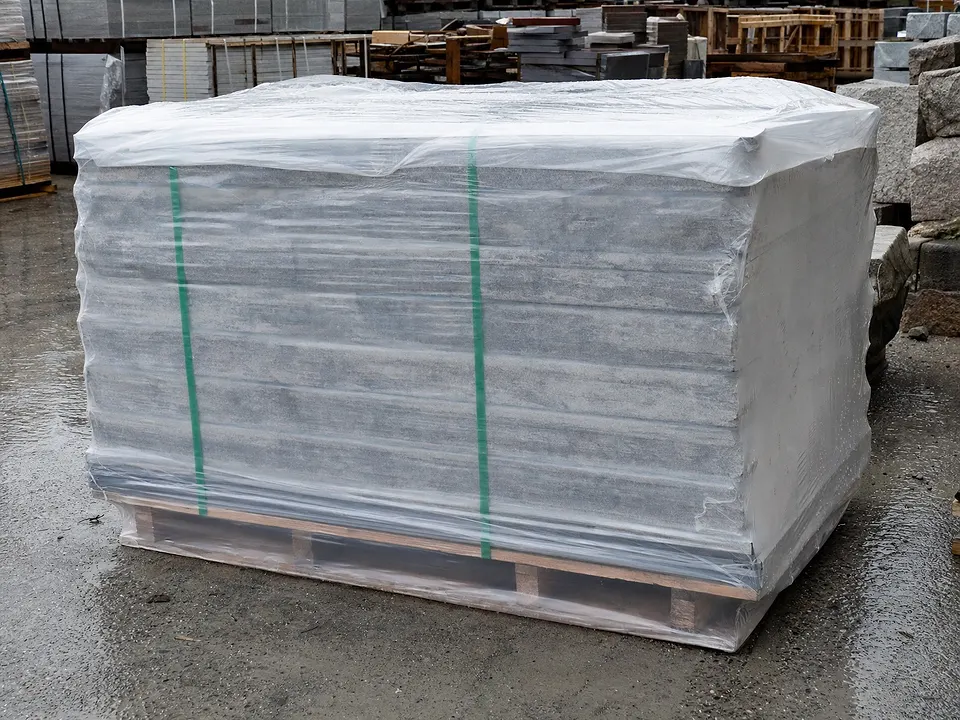
What a shrink cover does
A shrink cover is a large bag of shrink film sized to the pallet. It is pulled down over the load, then heated, usually with a propane heat gun, until it draws tight against the cartons. The result is a sealed skin over the top and all four sides. Shrink film needs that heat; stretch film doesn't and can't take it.1
When a cover is worth the heat
- Loads stored outdoors for weeks, where rain on the top layer would ruin it.
- Loads that must be visibly untouched on arrival.
- Irregular loads, like furniture or machinery, where wrapping round and round would not reach every face.
When stretch film is still the answer
For pallets that are wrapped, loaded and gone the same day, a cover is extra time, extra equipment and a flame on the dock. Stretch film holds the load by its own tension, stretching 25 to 100 percent by hand or 150 to 350 percent on a machine.2 Need the top kept dry as well? Lay a sheet over the top before wrapping and catch it with the top wraps. Need the load hidden? Use opaque stretch film. Sitting in the sun? UV-inhibited film.
Sizing a cover
Covers are made to the pallet: a gusseted bag whose width and depth match the load's footprint, with enough length to come down the sides and tuck under the deck or pallet edge before it is shrunk. A cover too small won't reach; one too large shrinks with folds and thin spots. Sites using covers usually stock a few sizes for their standard pallets. That stocking and sizing is part of the cost of a cover that stretch film never has, because one roll fits any load.
Combining the two
Some loads get both: stretch film first, to hold the load together on the pallet, then a cover over the top for weather. That is common for goods stored outdoors in yards, and for export loads where a container may sit in the sun. If you only need the top protected, a cap sheet held by the top turns of stretch film does much of the same job without any heat.
Taking it off
A cover has to be cut away carefully, because it is shrunk against the product. Receiving docks used to stretch film may find covers slow to open. Ask the people at the other end before switching.
Which costs more to run
We don't quote prices here, and the answer depends on your volume. The difference to weigh is the work: a cover means sizing bags to pallets, a heat gun and someone trained to use it; stretch film means a dispenser or a wrapper you probably already have. Read pallet shrink wrap, explained for how stretch film holds a load.
Equipment a cover line needs
A site switching to covers needs bags in each pallet size, a stand or frame to pull them over tall loads, a heat source with its fuel or power supply, and somewhere safe to store it. Gas guns need cylinders, regulators and hoses checked regularly. High-volume operations use shrink frames that move a ring of burners up and down the load, or tunnels that the pallet travels through on a conveyor. Each step adds cost and floor space that a stretch wrapper doesn't, which is why covers are usually reserved for loads that genuinely need sealing.
Outdoor storage without a cover
For loads that will be outside only for days, a cheaper approach often works: a polyethylene cap sheet over the top, UV-inhibited stretch film round the sides, and the pallet stored on dunnage off wet ground. Rotate the oldest pallets inside first.
Covers for export
Ocean freight is where covers earn their keep most clearly: a sealed pallet resists salt air, dust and container rain, the condensation that drips from a container roof as temperatures swing between day and night. Even then, many exporters use stretch film plus a top sheet and desiccant bags rather than heat, especially for mixed loads that would be awkward to cover.
Branded covers
Printed covers carry a logo or handling instructions, useful for display pallets or security, at higher minimum orders.
Questions readers ask
- Can a stretch hood replace a shrink cover?
- Stretch hooding is a separate system: a tube of stretch film pulled over the load by a machine, with no heat. It seals the top and sides like a cover. It needs its own equipment and film; we don't supply hooding film.
- What thickness are shrink covers?
- Usually several times thicker than pallet stretch film, for strength outdoors. Check with the cover supplier for your loads.
- Will a cover stop condensation?
- No. A sealed cover can trap moisture inside if a warm load cools or a cold one warms. Vented stretch film is the answer where the load needs air.
- Do covers need a tunnel?
- Many sites shrink covers with a hand-held gun; high-volume lines use a shrink frame or tunnel.
- Can a cover be reused?
- Shrunk covers are cut off and discarded or recycled; they can't be reshrunk.
Sources
- Industrial Packaging, "Difference between shrink and stretch film" (reviewed 2026-11-13)
- Colony Packaging, "4 differences between stretch film and shrink film" (reviewed 2026-11-13)
Facts on this page last reviewed 2026-11-13.